Monkey Sitting on Tree Branch Redwork Review
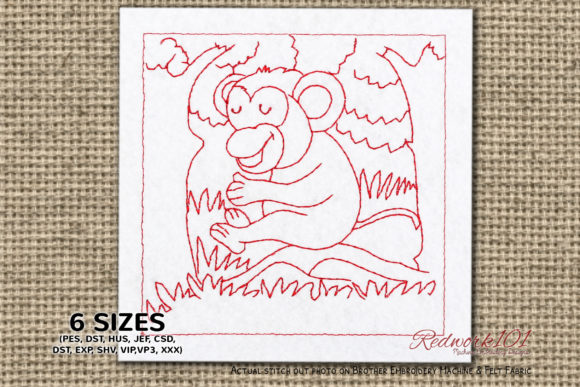
When I first opened this embroidery file, I immediately smiled. That’s the real test, isn’t it? Monkey Sitting on Tree Branch from Redwork101 has that genuine, playful charm that feels both classic and fresh. As a designer who stitches for clients and my own shop, my first thought wasn't about the stitch count—it was about the mood. This design creates an instant sense of gentle whimsy. It’s not a loud cartoon; it’s a quiet, cheerful character with a sweet smile and a relaxed posture on that simple branch. The layout is clean and centered, making it a straightforward candidate for a quick project, but its personality gives it a lot of potential value.
The Perfect Project Fit: Where This Monkey Thrives
I pictured this monkey on a natural canvas tote bag almost instantly. The earthy, handmade feel of the design pairs perfectly with that kind of utility item. It’s also an ideal candidate for a baby’s organic cotton sweater or a nursery pillow cover. The theme is gentle and universal—it’s a wild animal design that feels friendly, not fierce. This makes it a fantastic choice for personalized gifts, like a child’s birthday sweatshirt or a kitchen towel for a friend who loves gardening. For small business owners, especially those on Etsy or at craft fairs selling boutique baby items or casual home decor, this monkey adds a touch of recognizable, approachable artistry without being overly complex.
In commercial embroidery for apparel decorators, say on a simple tee or a cap, the design holds its own. Its clean lines and lack of overly dense fill stitch areas mean it embroiders quickly and crisply, which is crucial for cost-effective production. The smile is the key detail; it’s the focal point that customers will notice first, making the finished product feel engaging and well-made.
Where You Need a Careful Hoop and a Sharp Eye
While the design is lovely, its success depends on thoughtful execution. On very small hoop sizes, some of the finer details, like the curves of the branch and the definition in the monkey’s face, could lose clarity if the stitch density isn’t adjusted appropriately. I would be cautious using it on highly textured fabrics, like a loose-knit sweater, or on very thin, stretchy materials without a robust stabilizer strategy. The design’s charm relies on clean outlines.
Stitching it on dark fabric backgrounds requires a deliberate thread color choice. The classic “redwork” style implies a single color, but you might need to go for a brighter, contrasting tone on navy or black to ensure the smile and shape pop. Also, on curved surfaces like caps, the slightly elongated branch might need a slight adjustment in placement to look perfectly balanced. It’s always wise to test the embroidery file on a scrap of your intended fabric first. This isn’t just about checking for errors; it’s about seeing how the visual personality translates to your specific material.
From Digital File to Customer Trust: The Value Translation
This is where practical design judgment matters most. When you stitch Monkey Sitting on Tree Branch onto a product, its visual appeal directly impacts perceived value. A crisp, happy monkey on a clean tote bag looks professional and intentional. It tells a customer that you, the maker, chose a design with character, not just a generic asset. For a handmade presentation, this adds a layer of storytelling. It feels like a complete product, not just a fabric with some stitches on it.
For giftability, this design is a winner. It’s non-seasonal, so it works for any occasion, and it’s emotionally positive without being sentimental. That broad appeal increases its potential for engagement in your shop listings. Using it in printable mockups or digital product previews for your embroidery file shop shows its application clearly, helping buyers imagine it on their own projects. Always, however, confirm the licensing terms for this specific design before selling finished items or commercializing the digital product itself. Understanding whether it’s for personal use, limited commercial, or full commercial is a fundamental step for any creative entrepreneur.
A Designer’s Hands-On Notes Before You Stitch
- Test on Scrap: Run a sample on a remnant of your final fabric. Check thread color contrast, especially if deviating from a traditional red.
- Inspect the Details: Look closely at the small areas—the ends of the branch and the monkey’s features. Ensure your machine and stabilizer handle them cleanly.
- Consider Backgrounds: Visualize it on both light and dark backgrounds. Sometimes a design sings on one and fades on another.
- Match the Product: Ask yourself: does this fit the item’s function? A playful monkey might be perfect for a child’s apron but feel out of place on a formal jacket.
- Plan for Care: If the finished product, like a baby blanket or kitchen towel, will need frequent washing, ensure your stitch choices and stabilizer use can withstand it.
Monkey Sitting on Tree Branch Redwork is a design that does its job well. It’s fun, it’s straightforward to use, and it carries a warmth that translates beautifully from the digital file to the finished, stitched product. For designers, crafters, and shop owners looking for a reliable, charming wild animals embroidery design to add to their toolkit, this one deserves a spot in your next project queue. Just remember to do your practical homework first—that’s what turns a good design into a great finished product.