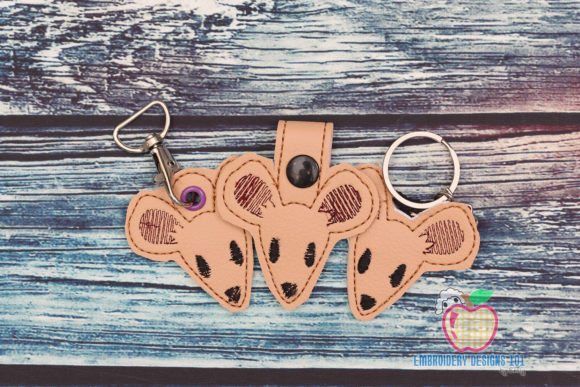
Antechinus ITH Keyfob Design: A Practical Project Review
When you're looking at embroidery files for real projects, especially commercial ones, you need to see beyond the thumbnail. A cute design isn't enough; it needs to stitch out cleanly, adapt to different products, and ultimately add value to your handmade item. I recently considered the Antechinus ITH Keyfob Design from Creative Fabrica for a series of custom tote bags and gift items, and here’s my honest evaluation from a working embroidery designer’s perspective.
First Impressions: Visual Mood and Project Fit
The Antechinus ITH Keyfob Design immediately presents a specific, charming mood. It belongs to the Wild Animals category, but its appeal is more than just thematic. The character has a detailed, almost whimsical personality conveyed through its stitching. This isn't a generic animal silhouette; it has decorative appeal with layered details that suggest good stitch definition. My first thought was its natural fit for handmade gifts and nursery decor. It felt ideal for products like baby blankets, personalized pillow covers, or unique kitchen towels where a friendly, detailed animal adds a special touch. The fact that it’s an In The Hoop design for a keyfob also signals it's built for a finished, sturdy object—a useful hint for its potential on other sturdy fabrics.
Performance in Real Embroidery Work
For any machine embroidery design, the promise on the screen must match the reality in the hoop. The key practical advantage here is the stated hoop compatibility. The design includes three versions—Snap Tab, Eyelet, and Ribbon—and each is noted as 4×4 hoop friendly. This is a significant benefit for small business owners using common smaller hoop machines. It also mentions compatibility with a 5×7 hoop, offering flexibility. For my project plan involving tote bags and caps, the 4×4 size is perfect. It allows for placement on bag straps, curved cap surfaces, or as a small feature on a sweatshirt without dominating the garment.
However, with any design featuring a small, detailed animal, practical considerations are paramount. I would be particularly mindful of stitch density in areas like the face or paws, and the potential for tiny lettering if any text is included (though the product description doesn't specify lettering). On textured fabric like a tote or stretchy fabric like a cap, a dense design can puckering. On dark fabric, thread color contrast needs to be planned carefully to maintain the design's visibility. For commercial embroidery products like patches or apparel decor, a clean stitch-out is essential for buyer trust and handmade presentation.
Adapting the Design for Various Products
While designed as a keyfob, the Antechinus ITH Keyfob Design has clear potential beyond its intended use. The separate Eyelet and Ribbon versions suggest structures that could inspire other applications. For example, the eyelet version could be adapted into a hanging ornament or a bag charm. The core animal motif, being 4×4, is perfectly sized for:
- Custom apparel: A subtle detail on a sweatshirt sleeve or apron corner.
- Baby items: A sweet accent on a blanket corner or bib.
- Home decor: Embroidered directly onto a pillow cover or kitchen towel.
- Handmade gifts: Created as a standalone patch to be applied to various items.
This adaptability increases its value for Etsy sellers and craft fair vendors looking for a versatile digital embroidery file. One design can fuel multiple product listings, aiding brand consistency across a collection.
Practical Embroidery Notes for a Successful Stitch-Out
Before committing this design to a customer order, a professional workflow is non-negotiable. Here are the steps I would take, and I advise any crafter or apparel decorator to follow:
- Test on scrap fabric: Use the same material as your final product (e.g., tote bag cotton, cap mesh, baby jersey).
- Check thread color contrast: Create light and dark fabric mockups mentally or digitally to plan your palette.
- Review stitch density: Observe the first test for overly dense fill stitch areas that may require adjusting tension or stabilizer.
- Use proper stabilizer: A sturdy cut-away is likely best for keyfob structure, but for apparel, a lighter tear-away might suffice.
- Inspect small details after stitching: Ensure satin stitch edges are clean and running stitch details are distinct.
- Confirm all file details and licensing: Always, always check the Creative Fabrica product page for exact file formats, machine compatibility, and license terms before selling finished items. This product description provides hoop size info, but confirm the rest.
These steps directly affect product value and customer engagement. A poorly executed design on a beautiful tote bag undermines your work. A crisp, professional embroidered piece enhances visual appeal and giftability.
Affecting Product Value and Commercial Appeal
From a business standpoint, using a design like this is about more than decoration. For Etsy listings, boutique merchandise, or craft fair products, the Antechinus ITH Keyfob Design offers a unique, niche motif. The Wild Animals theme, specifically this lesser-known marsupial, can attract customers looking for something beyond common cats or dogs. This uniqueness aids in product photography and storytelling in your listings.
For commercial embroidery projects, such as a series of branded aprons or uniform patches, the design’s clarity and small hoop size make it efficient to produce. Its decorative appeal can elevate a simple product like a kitchen towel into a desirable handmade item. However, its suitability for products that need frequent washing should be considered. A design with many small, tight stitches might hold up better on a keyfob or patch than on a frequently laundered sweatshirt—again, testing is key.
Is This Creative Fabrica Embroidery Design Worth Using?
My final assessment is cautiously positive. The Antechinus ITH Keyfob Design presents a charming, detailed animal motif with practical hoop size advantages for small-scale projects. Its inclusion of three versions adds immediate utility. For embroidery designers targeting the gift, nursery, or unique apparel market, it’s a strong candidate. However, its success hinges entirely on the practitioner’s diligence. You must verify the embroidery file specifics, test rigorously on your intended materials, and plan for thread and stabilizer choices. It is not a "one-click, perfect-result" design; it is a quality design asset that requires skilled execution to unlock its potential for finished products that truly impress and sell.
If you’re a creative entrepreneur looking for a distinctive, small-scale animal design with built-in structural options, this is worth a close look on Creative Fabrica. But approach it as a professional: with a scrap of fabric, your hoop, and a critical eye ready for that first test stitch.