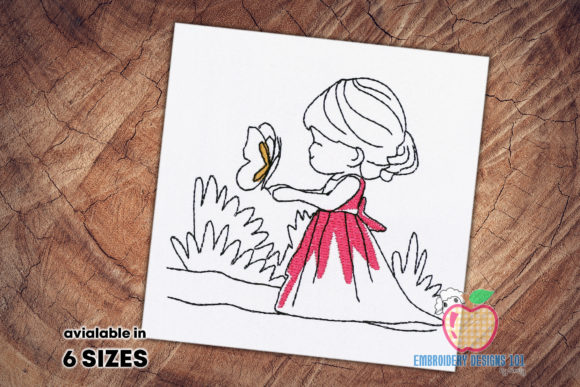
A First Impression of Girl Playing with Butterfly Quick Stitch
As an embroidery designer preparing for a weekend craft fair, my first reaction to the Girl Playing with Butterfly Quick Stitch is a sense of gentle, nostalgic charm. This design leans into a soft and cute aesthetic, with a decorative quality that feels both timeless and approachable. The theme is universal—the simple joy of a child interacting with nature. This isn't a bold, modern graphic or a rustic farmhouse motif; it’s a delicate scene that promises to add a touch of handmade warmth to any product.
Where This Design Stands Out on the Craft Fair Table
Visualizing my booth display—tote bags, aprons, tea towels, patches, caps, and pillow covers—I immediately see this design carving out a specific niche. Its appeal is emotional and gentle. On a busy table, Girl Playing with Butterfly Quick Stitch won’t shout for attention, but it will attract a certain customer’s eye: someone looking for a gift, a parent, or a buyer drawn to softer, story-like imagery. It’s a design that invites a closer look.
For maximum impact, I would position it as a focal point on giftable items. A small fabric pouch or a pillow cover would allow the scene to be appreciated fully. On a tote bag or market bag, it would serve as a charming decorative element rather than a bold statement piece. Given the description notes it comes in multiple sizes and is "not 100 filled," I anticipate it has a lighter stitch density, which can be excellent for breathable fabrics like linen tea towels or lighter canvas, preventing a stiff, heavy feel.
Practical Performance on Key Products
Let’s break down how this machine embroidery design would perform on the products I’m likely to produce.
Tote Bags & Aprons
On a tote bag, this design works best as a medium-sized accent. Its lighter fill means it won’t add excessive weight or stiffness to the bag’s side. For an apron, particularly a linen or cotton one, it’s a perfect fit—the playful, gentle theme aligns perfectly with kitchen and garden wear. The contrast between the soft design and the utilitarian product creates a lovely handmade quality.
Tea Towels & Pillow Covers
These are prime candidates. A tea towel embroidered with this scene transforms a simple kitchen item into a gift. The lighter stitch density is a major advantage here, as dense embroidery on textured towels can look cluttered and wear poorly. On a pillow cover, it becomes a decorative centerpiece, especially if paired with complementary fabric colors.
Caps, Patches, & Small Pouches
For caps, the curved surface requires careful stabilizer choice. The smaller sizes of the design file will be crucial here. As a patch, it would be charming but I’d advise caution: tiny details, like the girl’s features or the butterfly’s delicate lines, might lose clarity at very small patch sizes. A small pouch is an ideal application—it’s a complete, giftable product where the design can shine as the sole decoration.
The Selling & Production Reality
From a seller’s perspective, Girl Playing with Butterfly Quick Stitch is easy to understand at a glance. Its story is clear, which helps in both online listings and in-person booth sales. For batch production, the “fun and easy to stitch” description suggests efficiency, but the true test is repeatability. I would need to verify the stitch count and file cleanliness to ensure it runs smoothly for multiple units.
Photography for Etsy listings or printable mockups will be key. This design, with its softer lines, will benefit from natural light photography on neutral or light-colored fabrics to highlight the details. On dark fabrics, thread contrast is paramount—a white or bright thread palette would be essential to maintain the design’s visibility and appeal.
Careful Use Notes for Best Results
- Small Sizes: Be mindful of applying the smallest file version. Tiny lettering or intricate details (if present) may not stitch cleanly.
- Fabric Texture: On heavily textured items like certain tea towels, the design's lighter fill could actually be an advantage, preventing a muddy look.
- Stitch Density: Since it’s noted as not fully filled, it may be less prone to puckering on thinner fabrics, but a proper stabilizer is still non-negotiable.
- Thread Color Choice: This design’s mood depends on soft, likely pastel or natural thread colors. Test on scrap fabric first.
Designer Notes for Your Production Checklist
Before I stitch this onto any product for sale, my professional checklist is straightforward but vital.
- Test on Scrap: Always stitch a sample on the exact fabric type you plan to use (linen, canvas, cotton) to check for puckering and clarity.
- Confirm Hoop Size & File Formats: The product mentions multiple sizes. Match the correct embroidery file to your project’s hoop size.
- Inspect Stitch Density: Run the design and observe the stitch path. A lighter fill should mean quicker stitch times, which is great for batch production.
- Create a Real Mockup: Make at least one finished product sample—a tea towel or pouch—to judge its real-world appeal and photograph it for your shop.
- Compare Fabric Colors: Try the design on light, medium, and dark fabric swatches to decide which offers the best visual appeal and customer engagement.
- Confirm Licensing: As a digital embroidery file, verify its commercial use terms before selling any finished products at your craft fair or online store.
The Final Booth Impact
Incorporating Girl Playing with Butterfly Quick Stitch into my lineup adds a layer of emotional product value. It’s a design that enhances the handmade quality of my brand by offering a specific mood—one of sweetness and simplicity. In a booth display, grouping products featuring this design together creates a cohesive, inviting section that tells a small story. It engages buyers looking for that specific feeling, elevating a simple tote bag or apron into a thoughtful, decorative item. For the creative entrepreneur, it’s a versatile design file that, with careful production, can reliably become a charming part of your handmade product collection.